
- Books in this Lesson
- Level 1 Guide
- Level 2 Guide
- Schedule with the ELA Options
- Story of the Stars
- Formation of Stars Lesson
- Playdough Stars
- Star Formation Flipbook
- Discussion Questions Level 1
- Discussion Questions Level 2
- Rabbit Holes
- Play Based Activities
- Related Topics to Explore
- Timeline Entries
- Van Gogh’s Cosmos: Star Formation in a Swirling Sky
- Star Myths Around the World
- Sentence Types Lesson
- ELA Activities
Want more printables to go with this lesson? Check out my TPT store! This store will help keep this website going and ad free! If this is not financially viable for you, please reach out to me at admin@rabbitholelearning.org.
Books in this Lesson

Sun is Kind of a Big Deal (highly recommend!) 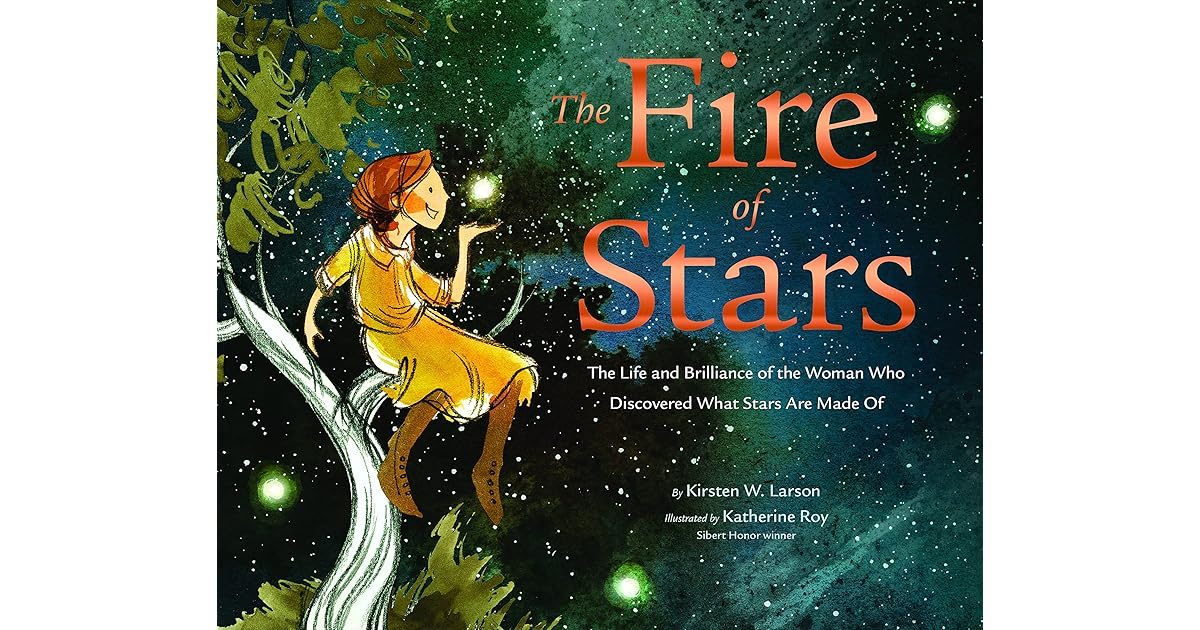
The Fire of the Stars (a biography about Cecilia Payne) 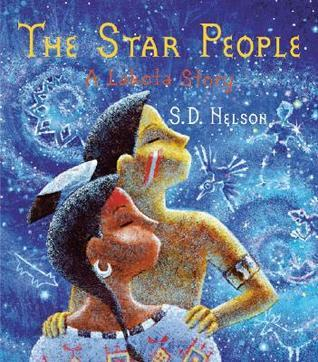
The Star People: A Lakota Story by S.D. Nelson 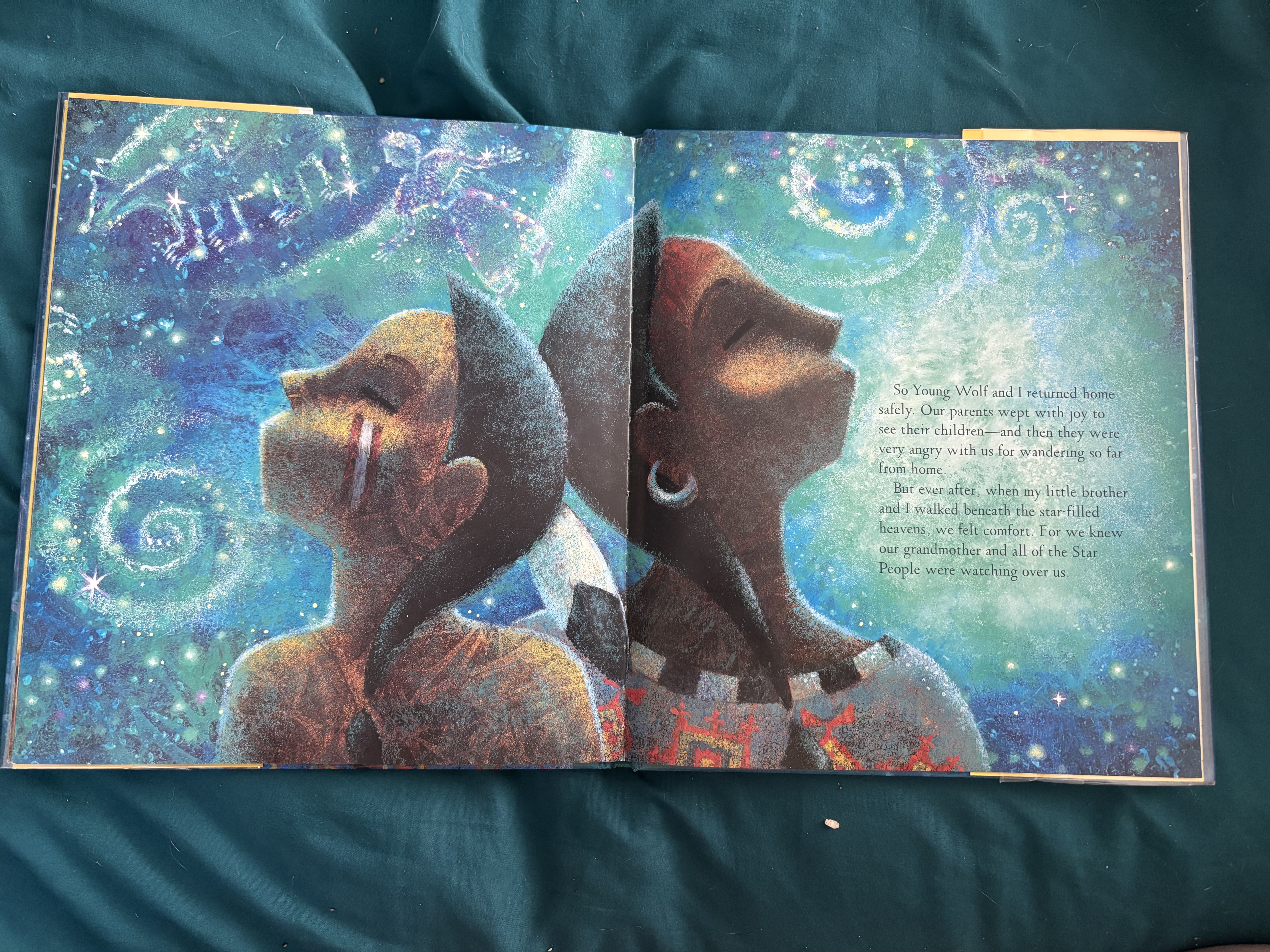
Look at how beautiful these illustrations are! 
How the Stars Came to Be by Poonam Mistry 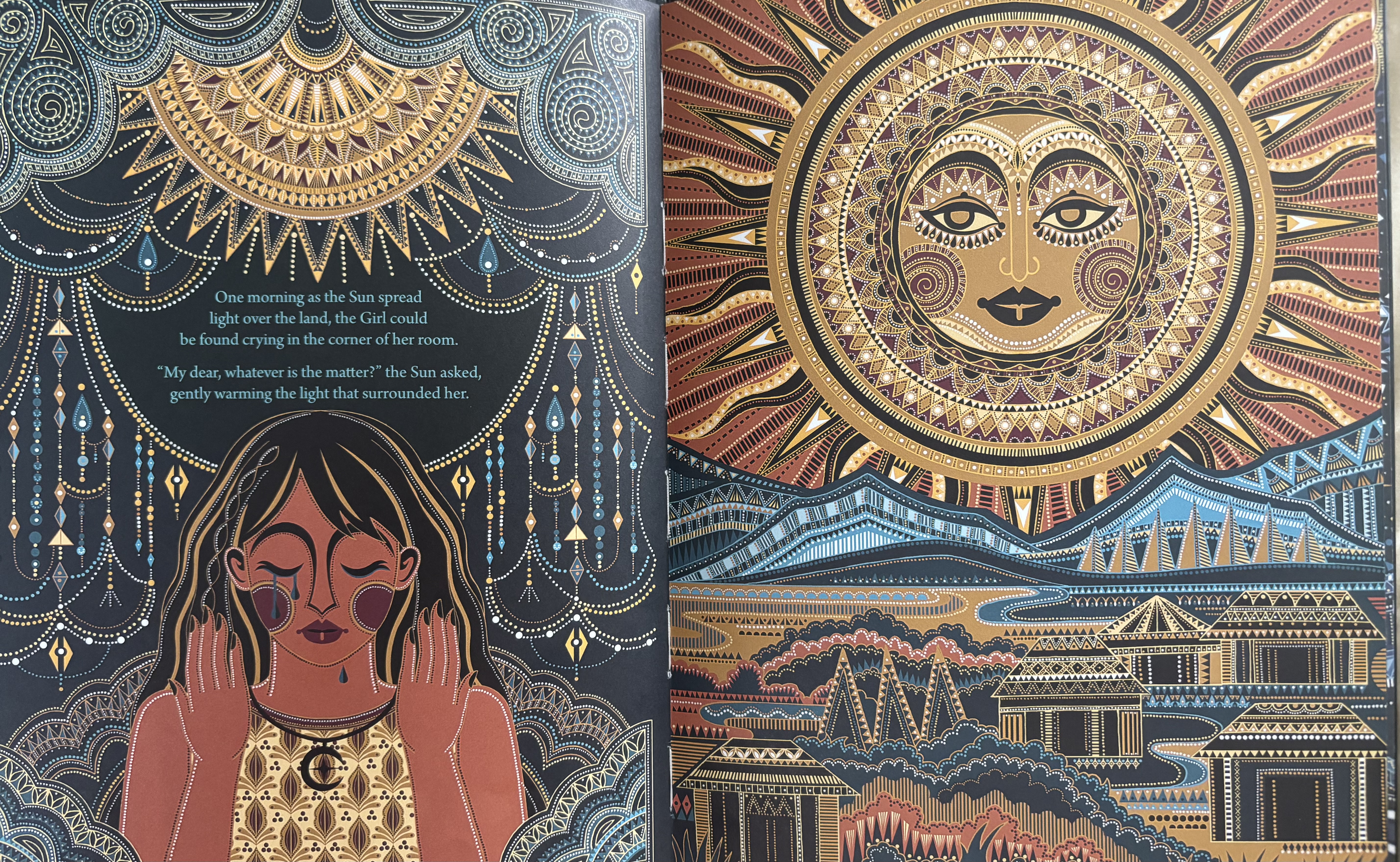
I was truly in aw about how amazing this book was. 
I was truly in aw about how amazing this book was. 
Katie and the Starry Night by James Mayhew 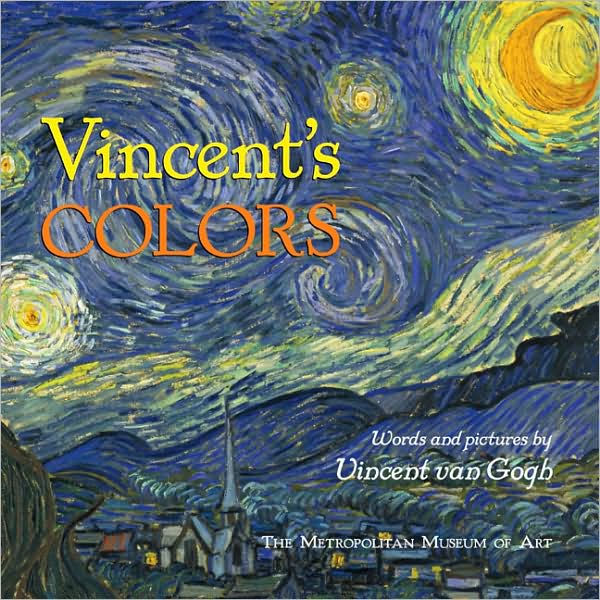
Vincent’s Colors By Vincent van Gogh 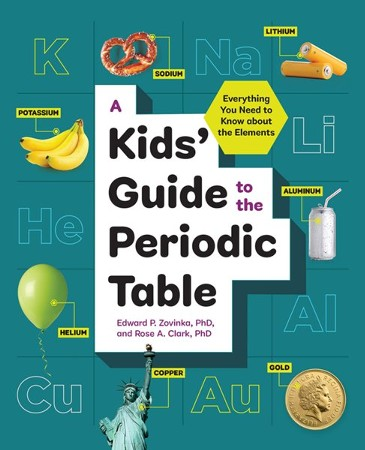
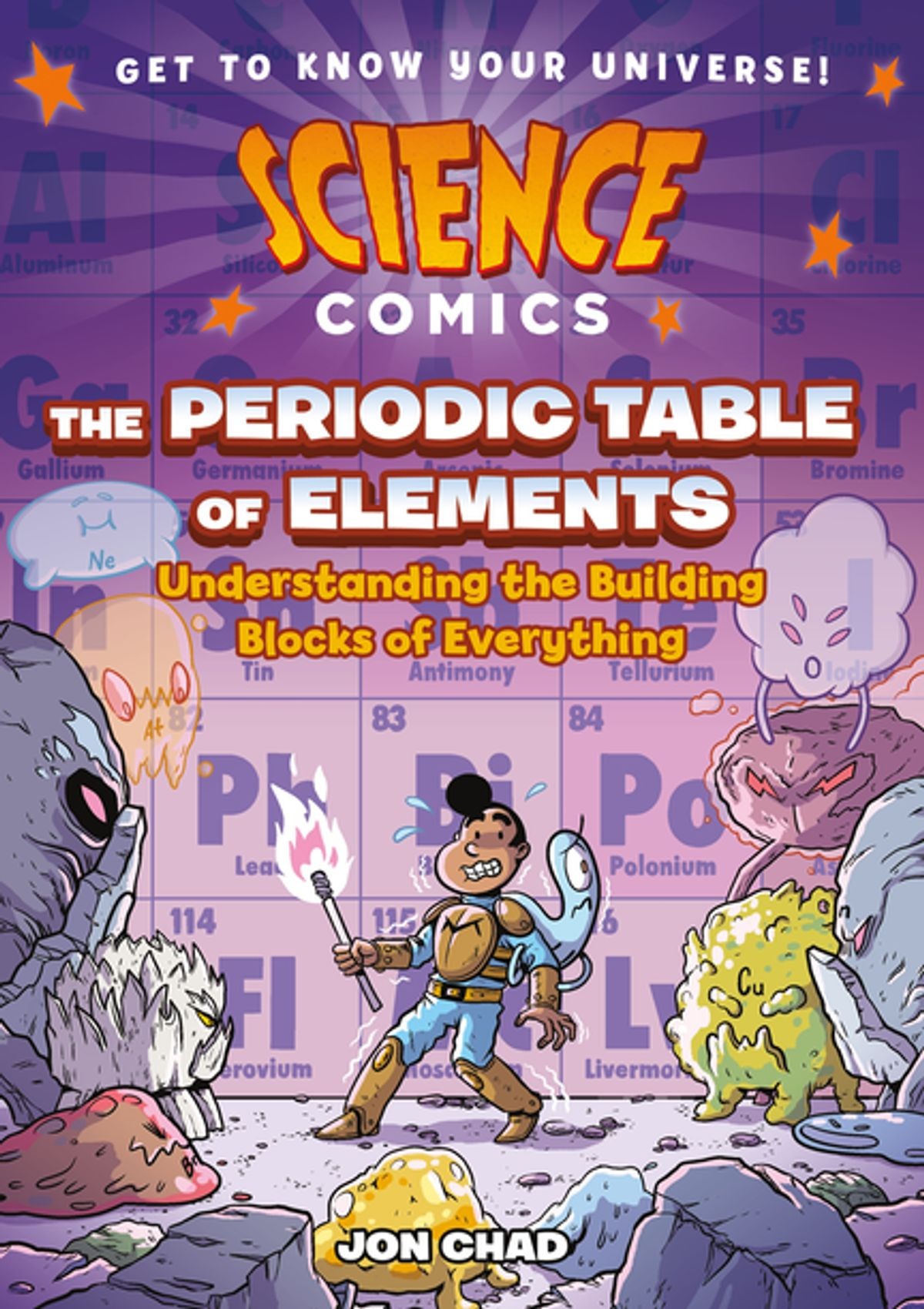
Science Comics: Periodic Table of Elements. Best for older students. 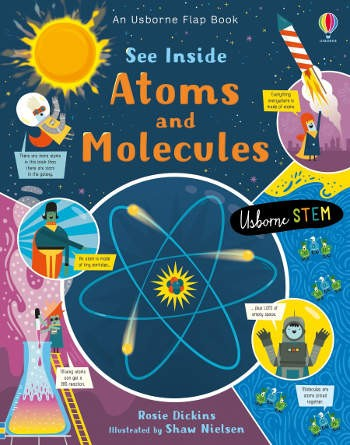
Usborne: See Inside Atoms and Molecules 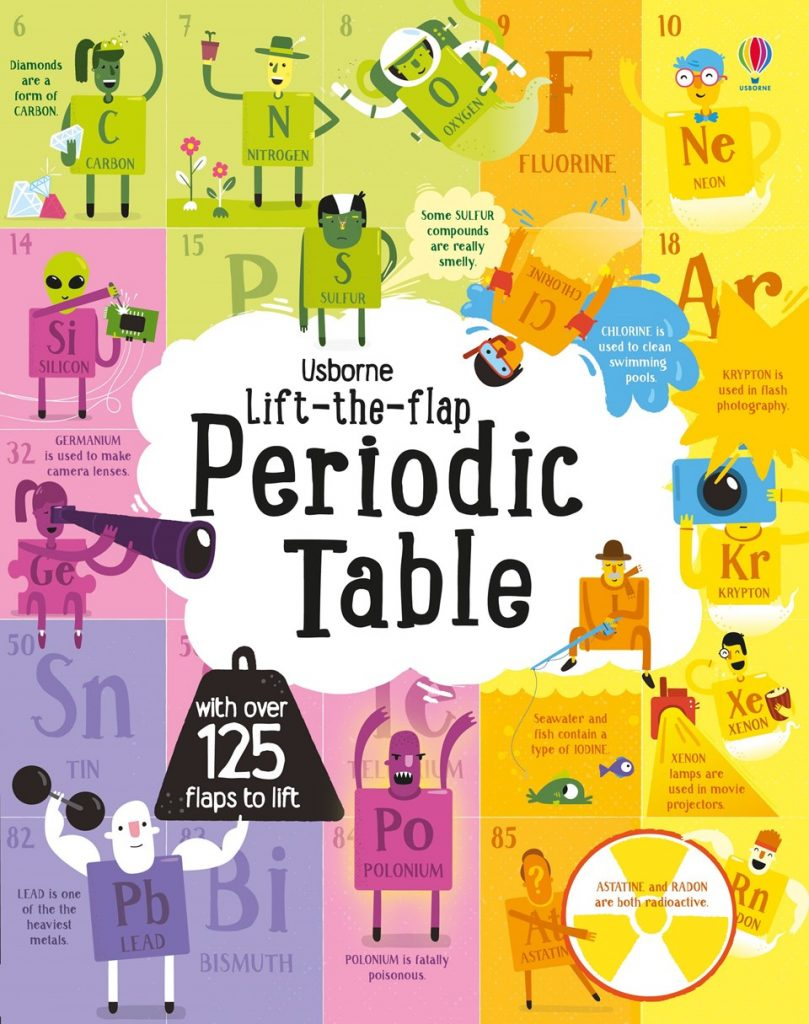
Usborne: See Inside Periodic Table 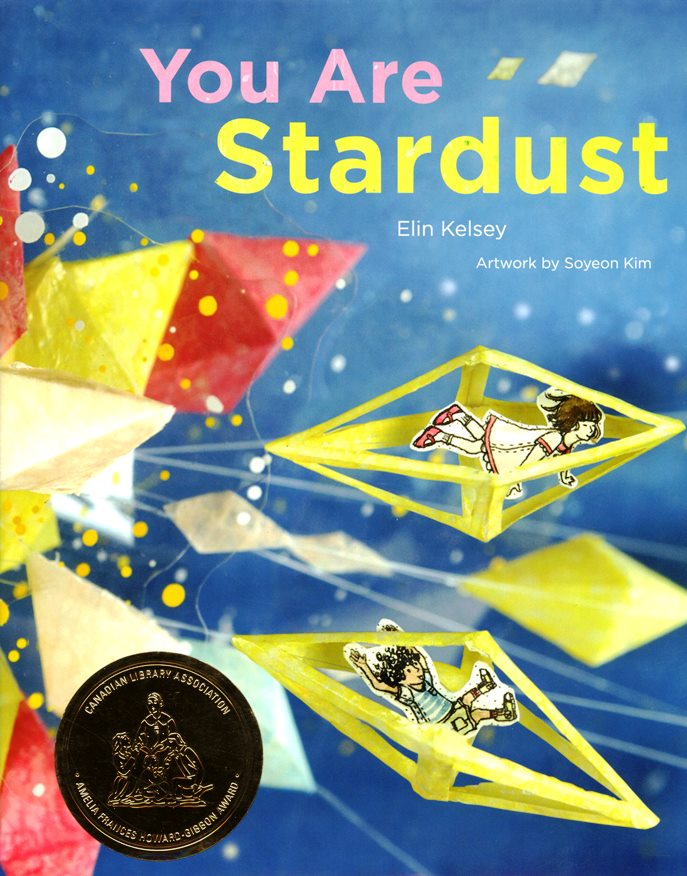
You are Stardust 

Our World in Pictures (Spine for the first 15 weeks of lessons) 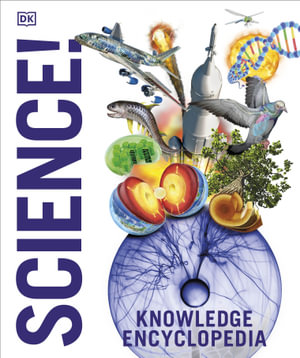
Lvl 2 Spine for the first 15 Weeks: DK’s Science as You’ve Never Seen it Before 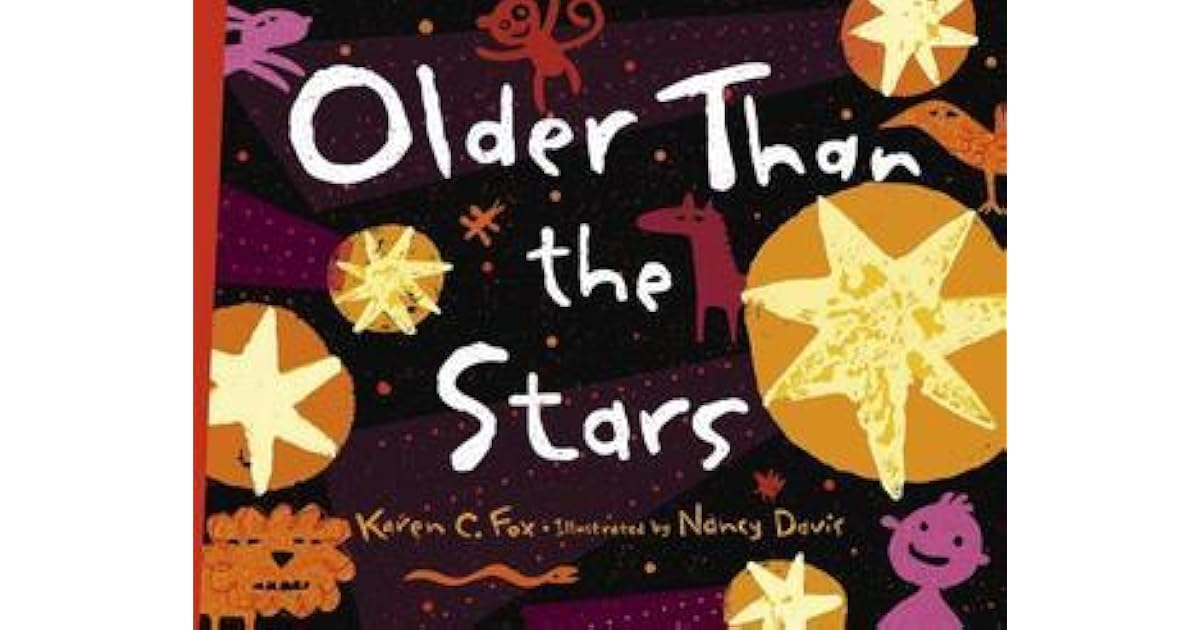
Older than the Stars (my number one recommendation for this lesson!)
Level 1 Guide
Big Ideas
- Stars are made of hot gas.
- Long ago, stars made the tiny bits that make everything, including you.
- When stars explode, they spread these bits everywhere (called elements).
Activities
- Conversation Starter: “How do you think the stars got into the sky?”
- Read: “The Story of the Stars”
- Play Dough Stars
- Discussion Questions
- Rabbit Holes
- Van Gogh’s Cosmos: Star Formation in a Swirling Sky
- Star Myths Around the World
- Optional ELA
- Sentence Types Lesson
Level 2 Guide
Big Ideas
- After the Big Bang, there was mostly hydrogen and helium.
- Stars fused these into heavier elements like carbon, oxygen, iron.
- When massive stars die, they explode (supernova) and scatter those elements.
Activities
- Conversation Starter: “How do you think the stars got into the sky?”
- Lesson on Star Formation
- Formation of Stars Flipbook
- Discussion Questions
- Rabbit Holes
- Van Gogh’s Cosmos: Star Formation in a Swirling Sky
- Star Myths Around the World
- Optional ELA
- Sentence Types Lesson
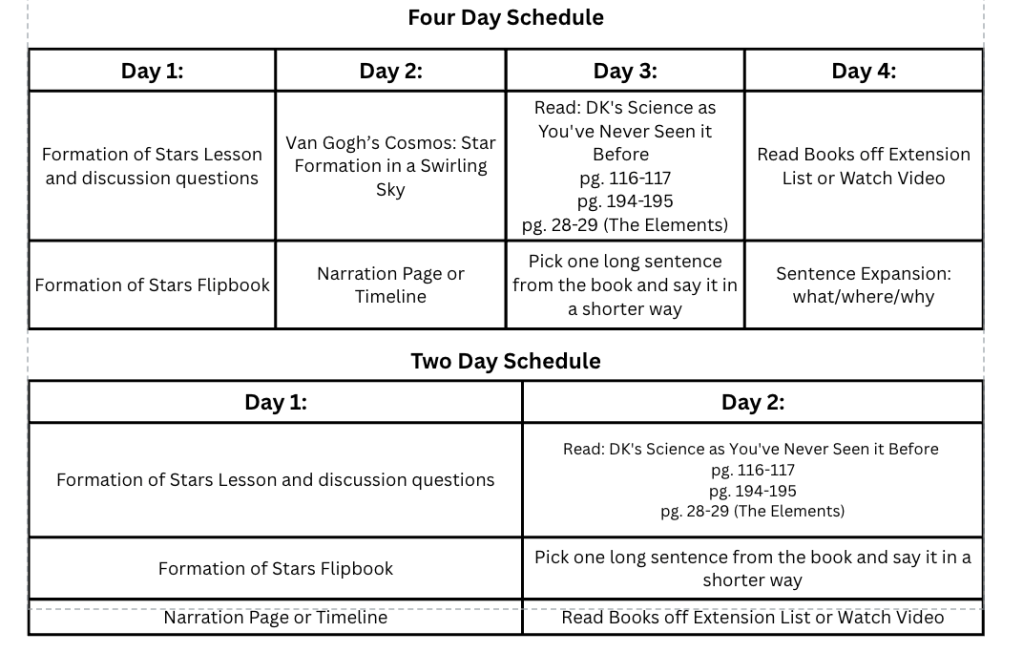
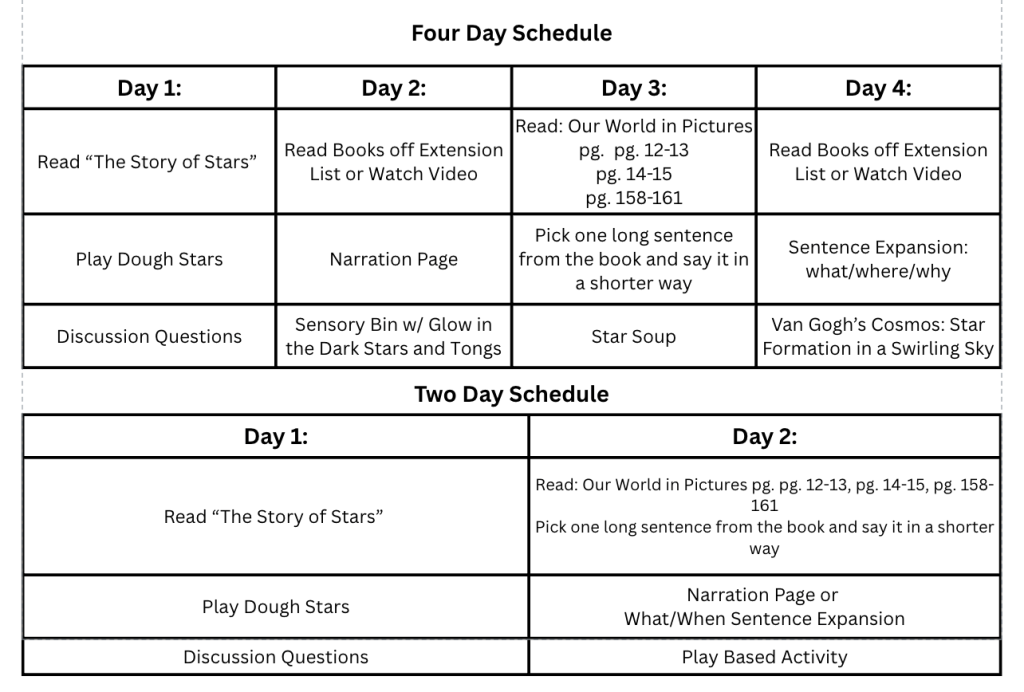
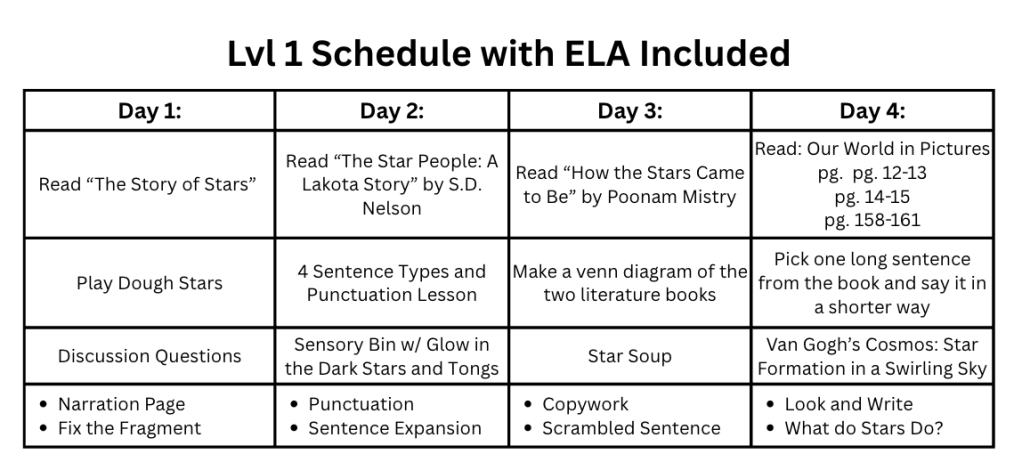
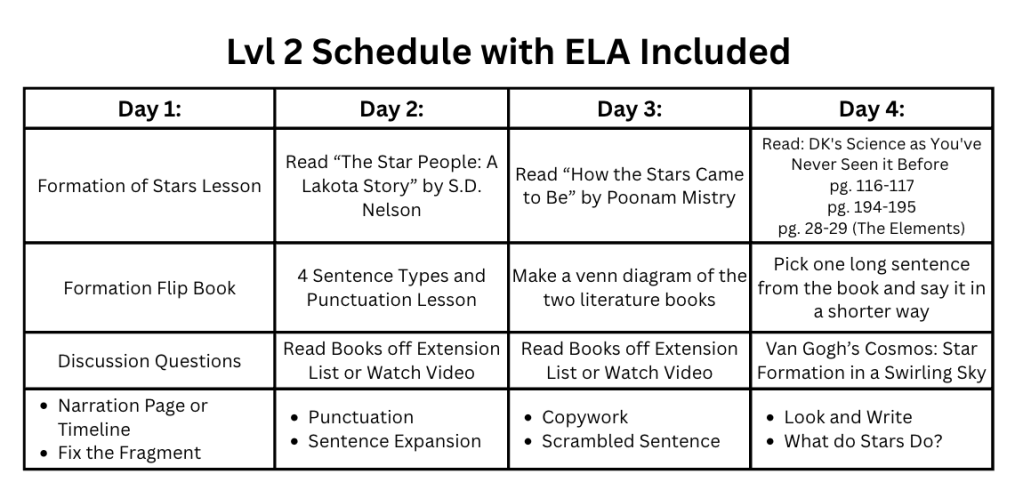
Schedule with the ELA Options
Story of the Stars
Long, long ago—after the universe was born but before there were planets or people—the universe was dark.
There were no stars to twinkle,
no suns to shine,
just clouds of gas drifting through endless space.
These clouds were made of the simplest stuff: hydrogen and helium. They floated and swirled, slow as a whisper.
But gravity—an invisible pull—began to tug.
It pulled the gas closer, tighter, rounder.
The clouds squeezed together, growing warmer and warmer inside.
Until one day…
Whoosh!
The very first star was born.
It blazed with light, filling the darkness with fire and glow.
Inside the heart of that star, something magical happened.
The star squeezed atoms together,
turning them into new atoms—new elements.
Hydrogen fused into helium.
Helium became carbon, oxygen, iron…
The very ingredients for everything we see today.
Stars became great cosmic kitchens,
cooking up the elements of the universe.
But stars cannot shine forever.
Some grew old and small.
Others exploded in spectacular supernovas,
scattering their star-stuff across the universe.
That stardust drifted and gathered,
forming new stars, new planets, and one day… a little blue world we call Earth.
The iron in your blood,
the calcium in your bones,
the oxygen you breathe—
all of it was made long ago inside stars.
You are made of star stuff.
And the story isn’t over.
Even now, far away in the night sky, new stars are still being born.
The universe is still creating, still changing, still full of mysteries.
So when you look up at the stars,
remember: they are your family.
They are where your story began.
Formation of Stars Lesson
Optional: Video Lesson On Stars
1. The Early Universe
Long ago, after the universe was born in the Big Bang, the cosmos was dark and empty. There were no stars, no planets, and no people—only vast clouds of gas floating through space.
These clouds were mostly hydrogen and helium, the simplest elements. They drifted slowly, almost like a whisper across the cosmos.
But something invisible began to act: gravity. Gravity pulls matter together. Slowly, the gas clouds started to clump, pulling tighter and tighter.
2. Birth of the First Stars
As the gas was squeezed, it heated up. Eventually, the gas became so hot and dense that nuclear reactions began—this was nuclear fusion, the process that powers stars.
Hydrogen atoms fused together to form helium.
Later, helium fused into heavier elements like carbon, oxygen, and iron.
At that moment, the first star was born! It blazed with light, filling the darkness and starting the long story of the universe’s chemistry. Stars became cosmic kitchens, creating the ingredients for planets, life, and even you.
3. The Life Cycle of Stars
Stars do not live forever. Their life depends on their size:
- Smaller stars (like our Sun) burn fuel slowly and shine for billions of years before becoming white dwarfs.
- Massive stars burn fuel quickly and end in giant explosions called supernovas, scattering newly made elements into space.
- This stardust drifts through space, gathering into new clouds, forming new stars, planets, and solar systems.
4. The Universe and You
The iron in your blood, the oxygen you breathe, and the calcium in your bones were all created inside stars long before Earth existed. In a very real sense, we are made of star stuff. And the story continues—every night, new stars are born in distant nebulae. The universe is still changing, still creating, and still full of mysteries waiting to be discovered.
Playdough Stars

Materials:
- Play dough in several colors
- A small ball (marble, bead, or crumpled foil) to use as a “star core”
- Optional: glitter or star confetti
Parent Background (What You Need to Know)
Long after the Big Bang, the universe was filled with clouds of hydrogen and helium. Gravity pulled these clouds together, squeezing them tighter until stars were born. Inside a star, atoms fuse together to make new elements. These elements—like carbon, oxygen, and iron—are the building blocks of everything we know, including us! Stars are like giant cosmic kitchens, “cooking up” the ingredients of the universe. When stars die, they release these elements into space, where they can form new stars, planets, and eventually, life. This activity helps children see and feel that process in a simple way.
Instructions:
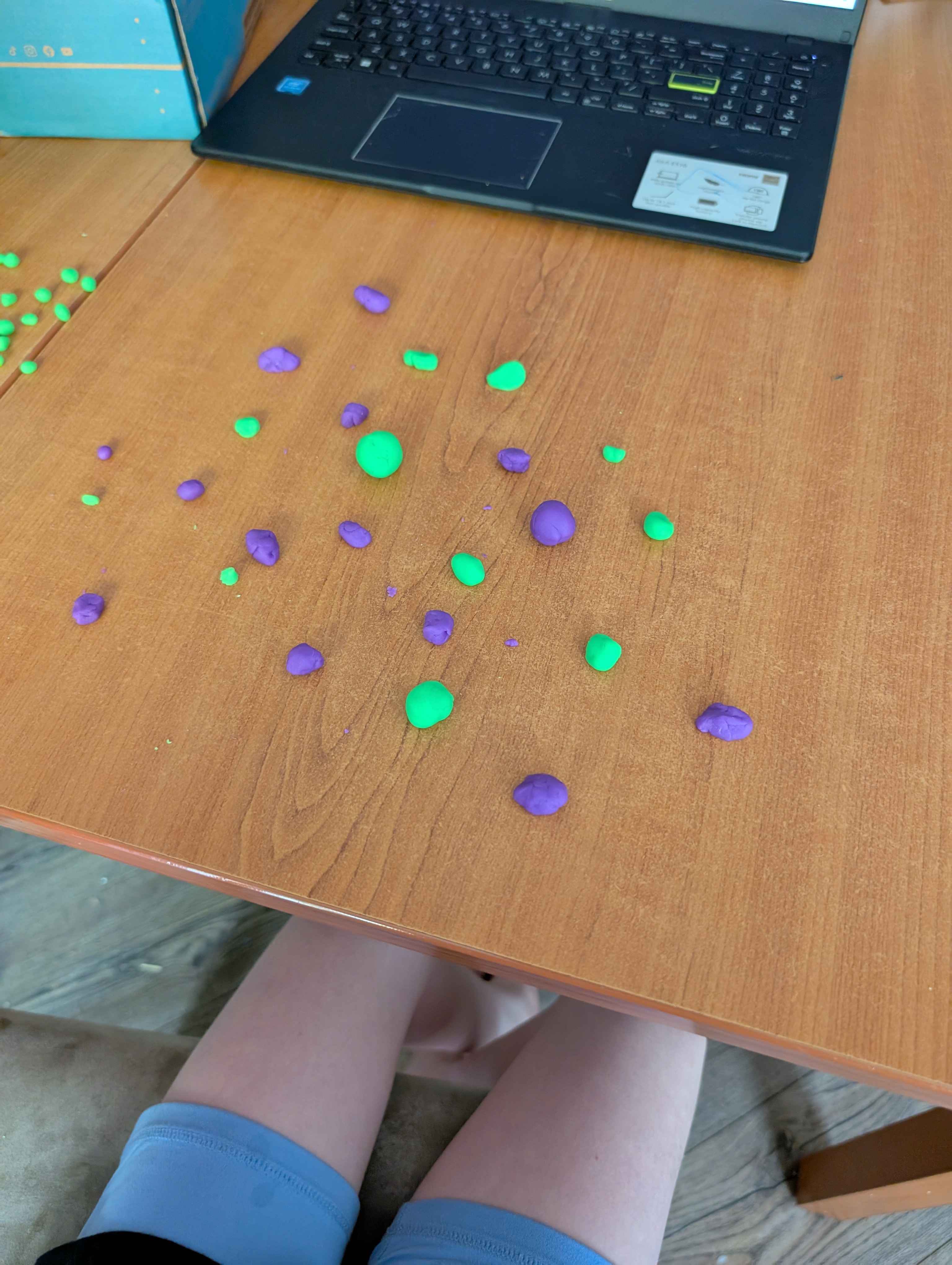
Step 1: Start with Clouds
Give your learner small bits of play dough (use just one color to start). Explain:
“These are like the clouds of gas floating in space after the Big Bang. They’re made of hydrogen and helium—the simplest elements.”
Let them roll the pieces into little balls and scatter them on the table.
Step 2: Gravity at Work
Ask your learner to slowly push the pieces together into a bigger ball.
“This is gravity pulling the gas closer and closer. As the cloud gets squeezed tighter, it heats up.” Let them roll until they’ve made a larger ball of dough.
Step 3: A Star is Born
Place the marble/foil ball inside the play dough and cover it up, saying:
“When the cloud gets hot enough, the middle of the star turns on like a giant oven. This is the star’s core. Here, atoms start to fuse together.”
Optional: Sprinkle glitter onto the outside to show the star shining.
Step 4: Cooking Up New Elements
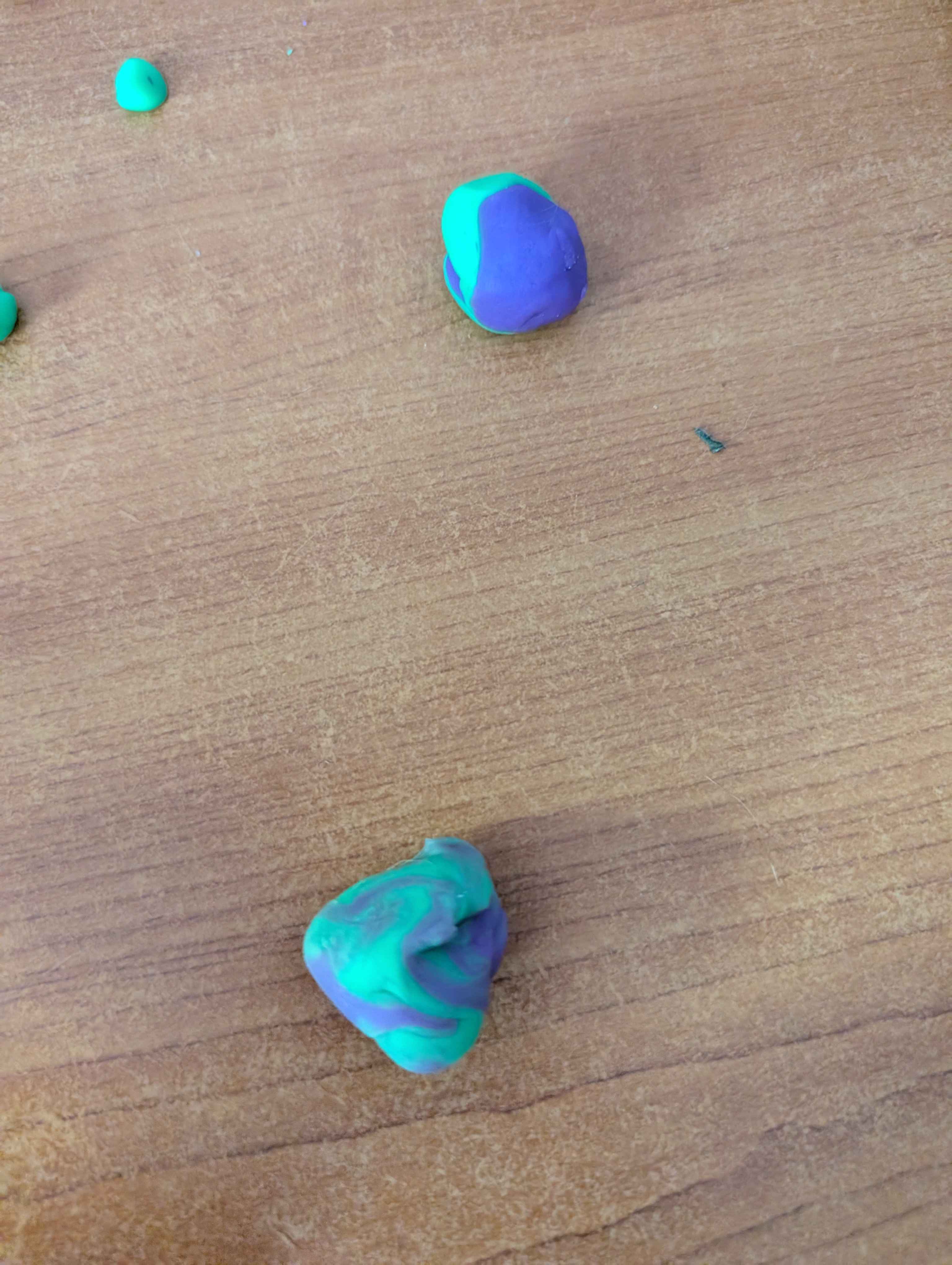
Take a second color of play dough. Roll tiny pieces and press them into the star ball.
“This shows how the star is making new elements. Hydrogen becomes helium, helium becomes carbon, and so on. The star is cooking the stuff we’re made of!”
Step 5: The End of a Star
Carefully tear it apart.
“Stars don’t live forever. Some puff out quietly, and some explode in a supernova. When they do, they scatter all those elements across space.”
Spread the colorful bits of play dough around.
Step 6: Stardust to Life
Gather the scattered pieces back together and form a small ball.
“This stardust can come together to make new stars, new planets, and even living things. The calcium in our teeth, the iron in our blood, the oxygen we breathe—all of it came from stars.”
Discussion Questions
- What happened when the little pieces came together?
- Why do you think stars are important for life?
- What do you think will happen to the stars we see in the sky someday?
Takeaway Message for Learners
“Stars are the universe’s kitchens. They cook up the elements that make everything—including you! You are made of stardust.”
Star Formation Flipbook
Discussion Questions Level 1
1. What was the universe like before stars were born?
- Sample Answer: “It was dark and full of gas clouds, but no stars or planets yet.”
2. How do stars get started?
- Sample Answer: “Gravity pulls gas together until it makes a star.”
3. What happens inside a star?
- Sample Answer: “The star cooks little atoms into bigger ones, like turning hydrogen into helium.”
4. What happens when stars get really old?
- Sample Answer: “They can explode and spread all the elements everywhere.”
5. Why are stars important for us?
- Sample Answer: “Because stars made the stuff we’re made of—like the iron in our blood and the oxygen we breathe.”
6. What does it mean when we say we are made of stardust?
- Sample Answer: “It means the atoms in our bodies were made long ago inside stars.”
Discussion Questions Level 2
1. What is a star, and how is it formed?
- Sample Answer: A star is a huge ball of hot gas that shines with its own light. Stars form when clouds of gas, mostly hydrogen and helium, are pulled together by gravity. As the gas is squeezed tighter, it gets hotter until nuclear fusion begins, creating a star.
2. What is nuclear fusion, and why is it important in stars?
- Sample Answer: Nuclear fusion is a process where atoms are squeezed together to form new, heavier atoms. In stars, hydrogen fuses into helium, and later helium can fuse into even heavier elements. Fusion produces the energy that makes stars shine and creates the elements we find in planets and living things.
3. Why do stars eventually die, and what happens when they do?
- Sample Answer: Stars die because they run out of fuel for nuclear fusion. Small stars like the Sun shrink into white dwarfs. Massive stars explode as supernovas, spreading elements into space that can become part of new stars, planets, and even living things.
4. What do we mean when we say “we are made of star stuff”?
- Sample Answer: This means the elements in our bodies—like carbon, oxygen, and iron—were originally made inside stars. When stars exploded, that material spread through space and eventually became part of Earth and all living things.
5. How does understanding stars help us understand the universe?
- Sample Answer: By studying stars, we learn about how elements are made, how planets and solar systems form, and the history of the universe. It helps us understand where everything around us came from, including ourselves.
Rabbit Holes
Extension Books
- You are Stardust (highly recommend for all ages)
- The Fire of Stars (biography: Cecilia Payne)
- The Sun is Kinda a Big Deal
- Why Do Elephants Need the Sun?
- Usborne: See Inside Periodic Table
- Usborne: See Inside Atoms and Molecules
- A Kids’ Guide to the Periodic Table: Everything You Need to Know about the Elements
- Science Comics: Periodic Table of Elements (older)
Additional Videos (younger)
- Is light a particle or a wave? – Colm Kelleher (ted ed)
- How do we study the stars? – Yuan-Sen Ting (ted ed)
- How the Stars in the Universe Formed | Big History Project
- The life cycle of a neutron star – David Lunney (ted ed)
- Stars: Crash Course Astronomy #26
- The Big Bang and The Nucleosynthesis
Big Questions to Ponder
- Why do you think stars were so important for shaping everything else in the universe?
- If stars create the heavier elements inside their cores, what does that mean about where things like oxygen, carbon, and iron came from?
- How can something as enormous as a star form out of something like gas?
- Do you think the universe will keep changing forever, or will it have an “end” one day? Why?
- What does it mean that we are “made of stardust”?
- If stars had never formed, what would the universe be like today?
- Why do scientists think studying light from stars is like looking back in time?
- What mysteries about the early universe do you think we still don’t know?
- If you could ask the very first star a question, what would you want to know?
Play Based Activities
Pale Blue Marbles “Nucleosynthesis with Playdough”
Sensory Bin
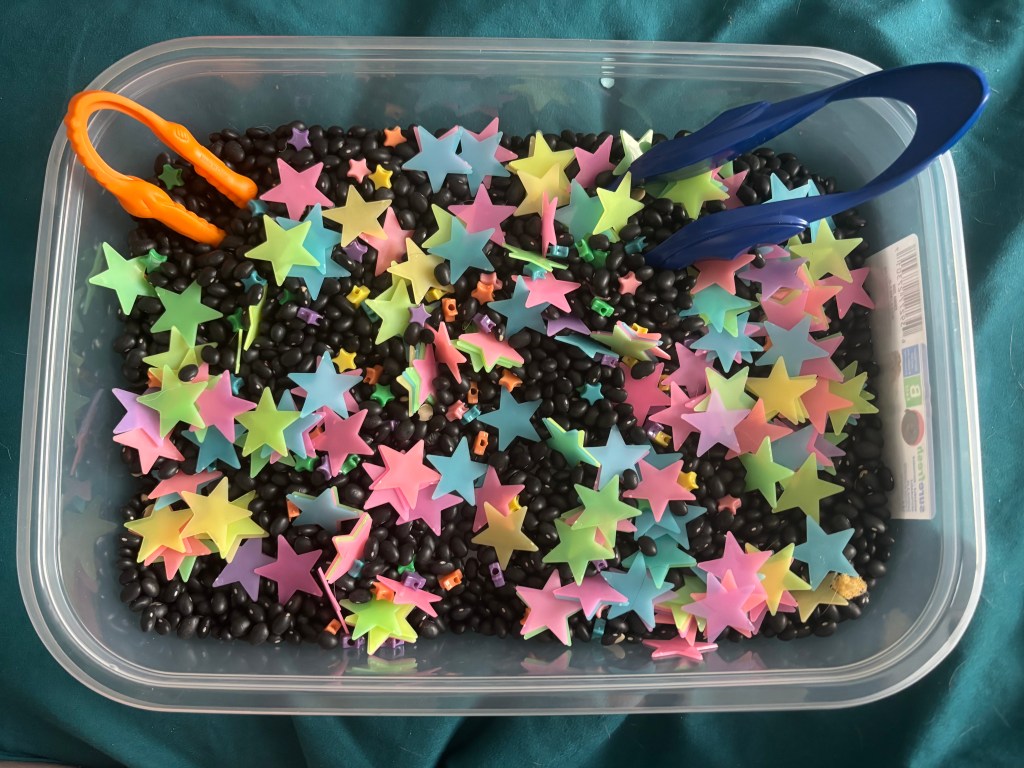
Keep your black base from the Big Bang week (black beans, pom poms, etc) and add glow-in-the-dark stars. Give your child tongs for fine motor practice as they pick them up. You can also write letters or numbers on the stars with a Sharpie and turn it into a matching or scavenger hunt game.
Star Soup
Note on materials: use whatever you have around the house! This doesn’t need specific items!
Intro (talk together):
- “Did you know you’re made of stardust?”
- “What do you think stars are made of?”
- “Long ago, there were no planets—just gas. That gas came together, and stars were born!”
Activity:
- Use a bowl as “space.”
- Add yellow/white pompoms = hydrogen.
- Add red/orange beads = helium.
- Add foil bits/pipe cleaners = heavier elements.
- Stir to make “star soup.”
- Optional: pour it out onto black paper to be a “supernova explosion.”
Reflection:
- “What surprised you most about stars?”
- “What’s something you learned you’d like to share?”
Related Topics to Explore
The Periodic Table of Elements
The chart that organizes all the elements in the universe. Most of these elements were forged inside stars and spread through space when stars died, meaning the Periodic Table is like a record of star-making.
Nuclear Fusion
The process that powers stars: hydrogen atoms fuse into helium, releasing huge amounts of energy. Fusion is what makes stars shine.
Supernovae
The explosive deaths of massive stars scatter heavy elements into space. These explosions are key to creating the building blocks for planets and life.
The Hertzsprung–Russell Diagram
This chart shows how stars are classified by brightness and temperature. It helps astronomers trace a star’s life cycle from formation to end.
Star Nurseries
Some regions of space, like the Orion Nebula, are especially rich in gas and dust, making them cosmic “nurseries” where new stars are being born right now.
Cecilia Payne-Gaposchkin
She was the first scientist to discover that stars are mostly made of hydrogen and helium. Her groundbreaking 1925 work changed our entire understanding of what stars are.
William Herschel
An astronomer in the 1700s who discovered nebulae (clouds of gas and dust). At first, people thought they were just fuzzy stars, but Herschel’s observations helped pave the way for understanding them as the birthplaces of stars.
Timeline Entries
380,000 years after the Big Bang – First Atoms Form
The universe cooled enough for protons and electrons to join together, creating hydrogen and helium atoms. Light could finally travel freely.
100–200 million years after the Big Bang – First Stars IgniteGravity pulled together huge clouds of hydrogen and helium, forming the very first stars. These stars lit up the universe for the first time.
Van Gogh’s Cosmos: Star Formation in a Swirling Sky
Goals
- Recognize The Starry Night as a famous artwork showing the night sky
- Understand that stars are made of hot gas and create elements through nuclear fusion
- Create their own “starry sky” artwork using swirling, layered colors to reflect movement and energy
- Make connections between art, emotion, and cosmic processes
Optional ELA Tie In:
Have your student generate 4 sentences after looking at the Starry Night (one statement, one question, one command, and one exclamation).
Step 1: Art & Observation
Show: The Starry Night (print or web)
Ask:
- What do you see?
- How do you think van Gogh felt when he painted this?
- Where are the stars?
- What words would you use to describe the sky?
Step 2: Science Connection – What Are Stars?
Big Idea: Stars are made of hot gas. Inside stars, new elements are created.
When stars explode (supernova), those elements spread out into space—those elements make up everything, including us!
Talking Points:
- The bright glowing parts in The Starry Night look like stars.
- Real stars are fiery balls of gas that make light and heat.
- Swirls and bursts in the painting remind us of how stars move energy and material through space.
- Supernovae spread the elements that form planets, Earth, and even our bodies!
Step 3: Art Making – Your Own Starry Sky
Try this one here on youtube
If you prefer non video instructions heres another project: https://thecraftyclassroom.com/crafts/famous-artist-crafts-for-kids/van-gogh-art-project/
Step 4: Reflect & Share
Ask learn(s) to point to parts of their art and explain:
- “This is where my biggest star exploded.”
- “I made my sky swirl like the painting because stars move energy.”
- “My stars are made of the same stuff as people!”
Additional Resources:
Coloring Page or Art Activity
- Masterpiece
- French Color by Number – Starry Night
- Starry Night style coloring page
- Starry Night – Vincent Van Gogh Colour by Numbers (Addition Task)
Books:
- Katie and the Starry Night by James Mayhew
- Vincent’s Colors By Vincent van Gogh
Videos (younger)
- Vincent Van Gogh for Kids !🎨 | Art History for Kids
- Starry Night by Vincent van Gogh | Fun Art History for Kids | Hands-On Education
Older (highly recommend for older learners and adults!)
- The unexpected math behind Van Gogh’s “Starry Night” – Natalya St. Clair
- New research finds Van Gogh’s ‘Starry Night’ skies align with physics
- Vincent Van Gogh’s The Starry Night: Great Art Explained
- What Makes The Starry Night From Vincent van Gogh So Special I Behind the Masterpiece
- Starry Night Analysis | What makes van Gogh unique? (Video Essay)
- How to Build Starry Night From a Pizza Box! | Van Gogh Art Project
- I also highly recommend Doctor Who (Season 5, Episode 10: “Vincent and the Doctor”). It’s a powerful, but an emotionally heavy episode that explores mental illness. Best suited for adults and older learners.
Star Myths Around the World
Goals:
- Compare and contrast star origin stories from two cultures
- Identify stars as a part of both science and storytelling
- Create their own star myth
- Recognize that different cultures have different ways of understanding the sky
Suggested Books
- The Star People: A Lakota Story by S.D. Nelson
- How the Stars Came to Be by Poonam Mistry
Discussion Questions:
Before Reading
- What do you think a “myth” is?
- Why do you think people long ago told stories about the stars?
After Reading The Star People
- What happened in the story that led the characters to see the stars?
- How did the Lakota people explain the stars in this story?
- What do you think the “Star People” represent?
After Reading How the Stars Came to Be
- How does this story explain the stars?
- What feelings do the illustrations give you?
- How is this story similar to or different from The Star People?
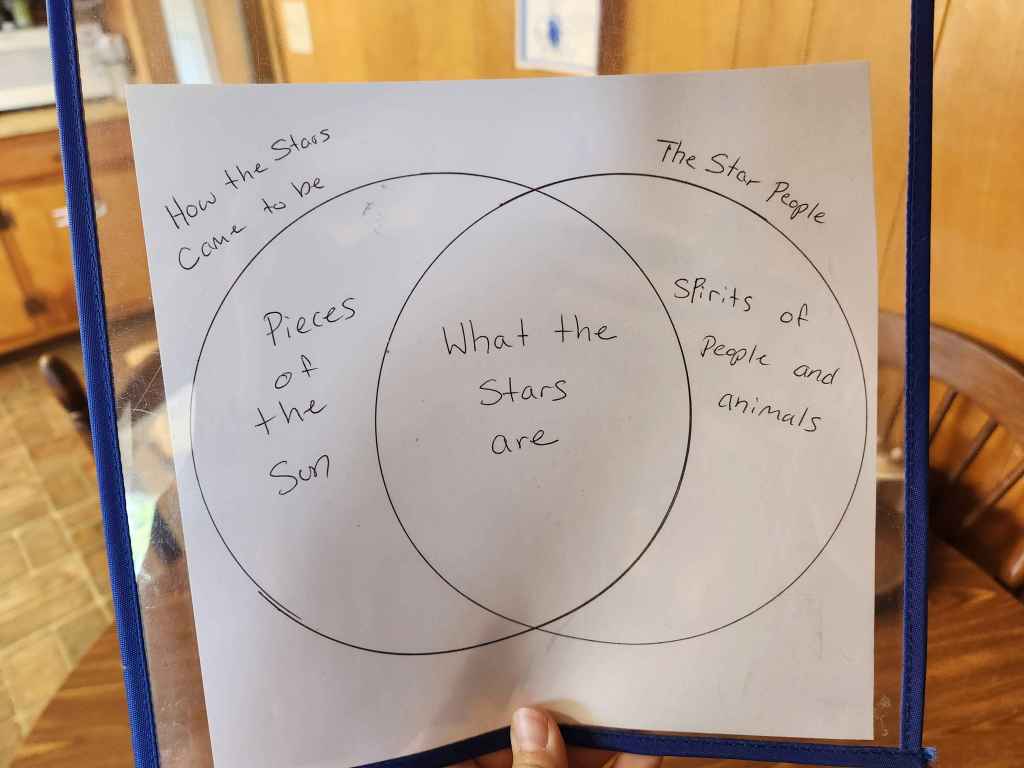
Story Comparison Chart
Create a simple Venn diagram or comparison chart like this one:
Cultural Exploration
- Locate the Lakota people on a U.S. map (North/South Dakota)
- Look at Indian folk art (like in Mistry’s book) and compare the use of patterns and color
- Discuss why different cultures might tell different stories about the same sky
Create a Constellation Myth
Have your learner draw a picture using 6–10 star stickers or white dots on black paper. Connect the stars into a shape.
Ask: What does it look like? A bird? A fish? A dancing person?
Write a short myth that tells how it got into the sky.
Example Writing Prompt: “Long ago, before the stars lived in the sky, there was a _______ who…”
Sentence Types Lesson
Goal
Students will learn the four types of sentences (declarative, interrogative, exclamatory, and imperative) and their ending punctuation. They will practice writing sentences about how stars form.
1. Hook
Have you ever looked up at the night sky and wondered how the stars got there? Today, we’re going to talk about stars and practice writing different kinds of sentences about them!
2. Introduce the Four Types of Sentences:
Show a picture of a starry sky. Then explain each sentence type with examples:
- Declarative (statement): Tells something. “Stars are made from gas and dust. Can you tell me something you notice about the stars? That is a statement and they end with a period.”
- Interrogative (question): Asks something. “Sometimes we want to ask questions about stars. Can you ask me a question about them?” That is a question and it ends with a question mark.
- Exclamatory (exclamation): Shows excitement or strong feeling. “When we see something amazing about the stars, we can use an exclamation! Let’s say one together.” That is an exclamation, we end those with an exclamation mark!
- Imperative (command): Gives a command or instruction. “We can also tell someone to do something. What would you tell someone to do while looking at the stars?” That’s a command. They can end with an exclamation mark or a period.
3. Guided Practice:
“Let’s write one sentence of each type about the stars you see in this picture/video.”
Provide paper or a whiteboard.
Encourage child to say their sentence aloud before writing. If your student isn’t ready for writing their own sentences, write them for them, but ask them what punctuation mark goes at the end.
4. Practice with Star Sentences
Decide what type of punctuation each of these sentences need (sometimes that’s up to interpretation!)
- Stars formed after the Big Bang
- Can you see the stars in the sky
- What a bright star that is
- Gas and dust came together to make stars
- Did the stars form right away
- Wow, that star is huge
- The stars are made of hot gases
- How do stars make light
- Look at that tiny star
- A star was born in the sky
4. Fun Activity
“Can you think of a sentence that could be more than one type depending on how you say it? The way we speak can completely change how we write!”
Example: Say “Mushrooms for dinner” as a neutral statement, a question, a disgusted exclamation, and a forceful command.
5. Wrap-Up / Conversation Starters:
“Now you know four ways to write about anything, even stars! Which sentence type was your favorite?”
“Can you see if you can find real stars outside tonight and make one of each type of sentence?”
Book Extensions
- Semicolons, Cupcakes, and Cucumbers Written and illustrated by Steve Newberry
- Punctuation Takes a Vacation Written by Robin Pulver and illustrated by Lynn Rowe Read
- Punctuation Celebration Written by Elsa Knight Bruno and illustrated by Jenny Whitehead
- Exclamation Mark by by Amy Krouse Rosenthal & Tom Lichtenheld
- Frog. Frog? Frog! by Nancy Loewen
- When & Why Did the Horse Fly by Cari Meister
Video Extensions
- Punctuation Explained (by Punctuation!) | Scratch Garden
- Punctuation Story for Kids: The Day Punctuation Came to Town! | Vooks Storytime
- The Sentences Type Song | MC Grammar 🎤 | Educational Rap Songs for Kids 🎵
- Types of Sentences for Kids | Identifying Sentence Types | Writing Sentences | Twinkl
- Punctuation song from Grammaropolis – “Punctuation.?!”
Everyday Ways to Reinforce
- When reading a book, see if your learner can find the end punctuation marks.
- Scavenger Hunt. Write different end punctuation marks on sticky notes and scatter them through the house. Every time your child finds one, prompt them to come up with a sentence that ends with that mark.
- Play the game of saying things in different tones to modify the sentence type at different times. This is a great car or waiting room game. You can also expand on this activity to create a story together, and take turns changing a sentence’s type.
ELA Activities
These activities are designed to connect literacy skills to our science lessons while meeting students at their current level. They can be adapted for oral or written work depending on age and ability.
Narration Pages (multiple types)
Narrations give you a window into what’s going on inside your student’s mind. They help solidify learning and practice clear expression.
How to do it:
- Oral narration – Ask your student to tell you what they learned, in their own words. Use gentle prompts (“What happened first?” “Can you tell me more about…?”) to guide them.
- Draw & tell – The student draws a picture about what they learned, then explains it to you.
- Draw with labels – As they grow more confident, encourage them to label parts of their drawing to show understanding.
- Write or trace a sentence – Younger learners can copy or trace a sentence you provide; older learners can write their own summary sentence or short paragraph.
Sentence Expansion
This activity reviews the science content while helping students write richer, more descriptive sentences. The parts in bold are example answers. I generally do this orally with my children.
| They lit up. | |
| What? | The stars |
| Where? | in the sky (or space) |
| Why? | Because inside each star, tiny bits called atoms bump together and make light. |
| The stars lit up in the sky because inside each one, tiny atoms bump together and make bright light. | |
Because/But/So
- There were now stars, because
- There were now stars, but
- There were now stars, so
Fix the Fragment
Fragments are incomplete thoughts. Students identify and rewrite them so they make sense.
“when giant clouds of gas and dust collapse”
Sentence Scramble
Students rebuild a sentence from scrambled words, reinforcing sentence structure, grammar, and content vocabulary.
Example A:
elements
spread
stars
Exploding
their
Example B:
stardust
of
made
are
We
Example C:
Stars
gas
are
made
from
hot
Brainstorming Activity
A brainstorming activity is a quick way to collect ideas. Your learner lists everything they can think of about the topic—no right or wrong answers. This helps spark curiosity, see what they already know, and get ready to learn more.
Copywork
Reinforce handwriting, spelling, and attention to detail while reviewing science. Some options below.
- When did the stars form?
- What causes stars to form in giant clouds of gas and dust?
 Rabbit Hole Learning
