

When I first heard about Night Zookeeper, I was intrigued. A gamified approach to language arts? A platform that could actually get kids excited about writing? As a homeschooling parent, that sounded almost too good to be true.
At first, I thought it might actually deliver. My kids were excited, and while the program was a bit clunky to navigate, I had high hopes. They were drawing, watching the little episodes, and happily logging in. But pretty quickly, the excitement faded—and the problems became impossible to ignore.
What My Kids Actually Did
To be blunt: they drew pictures. A lot of pictures. And while drawing can be a fun addition to a literacy program, it ended up overshadowing the supposed “writing” element. If I just wanted my kids to doodle, we could use any art app—or, you know, good old paper and pencils.
The “game” itself wasn’t engaging enough to hold their interest, and before long they had lost enthusiasm for the platform altogether.
The Feedback Problem
One of the big selling points of Night Zookeeper is that kids supposedly get real feedback from staff. This is highlighted as a major reason to pay for the program. Unfortunately, what I saw was disappointing at best—and actively harmful at worst.
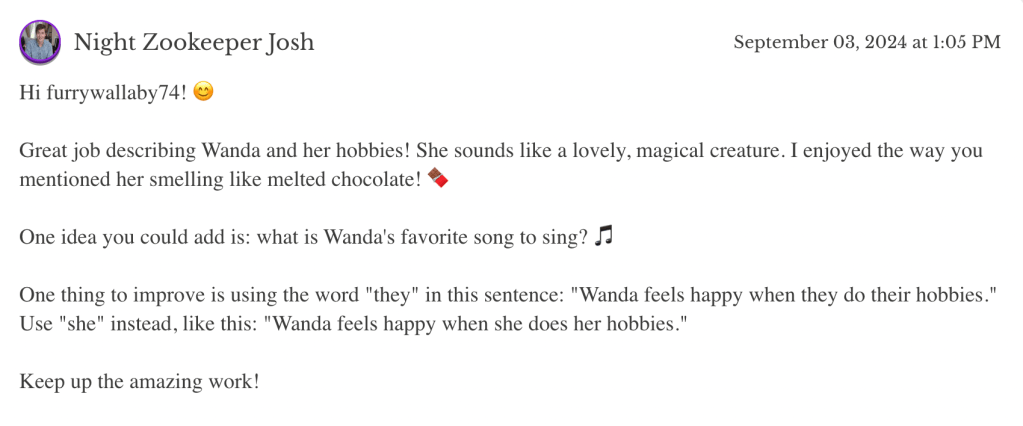
In the above example, my child wrote about their character Wanda using they/them pronouns. The staff “corrected” this, telling my child that changing they to she would “improve” their writing. No where in the writing did it indicate the character used anything other than they/them. This isn’t just wrong—it’s exclusionary.
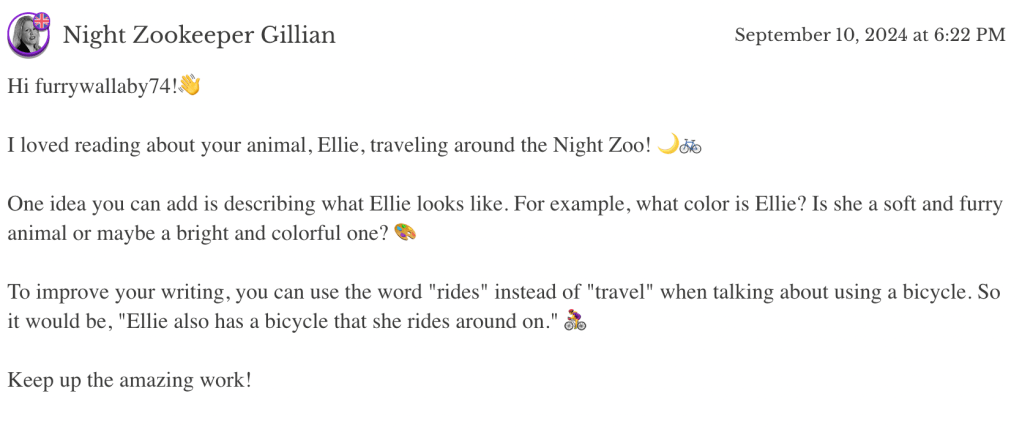
They also told my child that using verbs like traveled to describe biking was subpar (as if traveling only applies to certain modes of transportation).
They even marked “gray” as wrong for not being spelled “grey.”
That kind of prescriptive, rigid correction kills creativity and undermines confidence. And most of the other “feedback” was generic, lackluster, and not worth paying for.
Lack of Customization
Parents don’t get much control over tailoring the program to their child. You can change the overall grade level, but they don’t even explain what that actually changes. Worse, you can’t adjust grade levels by subject—it’s all or nothing. For a program aimed at kids who are often asynchronous learners, that’s a major flaw.
Yes you can send your children specific assignments, but that’s only one aspect of the program’s experience.
The Bigger Picture
I also want to point out that I’m not the only one with these concerns. While there are plenty of glowing reviews out there, many are influenced by the affiliate program, which pays for referrals. That means it’s hard for parents to find honest, critical takes.
There have been other people saying their child’s pro-lgbt content was removed and even that there was a writing assignment was bigoted. I don’t generally take an occasional rumor about a program without witnessing the actions myself, but in this case my own experiences verified that this behavior is consistent and not a one-off example or a bad moderator.
Beyond the clunky gameplay and poor feedback, the company has established a pattern of exclusionary behavior. Pushing back against something as simple as using they/them pronouns for a character sends a clear message that creativity and inclusivity aren’t truly supported.
There have been reports that Night Zoo Keeper is also incredibly difficult to cancel, but my subscription doesn’t run out for a few more weeks so I’ll have to wait to see about that criticism. Hopefully this issue has been resolved by now.
Final Thoughts
Night Zookeeper had potential. The concept is wonderful—an imaginative, gamified platform to make kids excited about writing. But in practice, it falls flat. Instead of empowering kids, it boxes them in. Instead of offering thoughtful feedback, it provides trivial criticisms and discouragement. Instead of inclusivity, it shows bias.
For the cost, the lack of customization, and the quality of what’s offered, I cannot recommend it. There are better, more flexible, and more supportive ways to foster a love of writing in children—ones that don’t come with hidden strings attached.
Better Alternatives
If you’re looking for programs that actually support kids in becoming confident writers, here are a few worth checking out:
- Prodigy English – While known for gamified math, Prodigy has also put out a gamified ELA program! While you can buy a membership, the base account is free.
- Mrs. Wordsmith – Engaging vocabulary and writing resources. (However, I don’t recommend their new Roblox tie-in game; Roblox is not a safe platform for kids.)
- Hearth & Story – A thoughtful, story-centered approach to literacy that values creativity and inclusivity.
- Quill.org – Free, nonprofit, and fantastic for practicing grammar and writing skills with meaningful feedback.
- NoRedInk – Strong grammar and writing practice, now with ELA resources for Grades 3–5 in addition to middle and high school.
Each of these has its flaws, but all of them respect the learner far more than Night Zookeeper does.

 Rabbit Hole Learning
Leave a comment