
Every story has a beginning. For our universe, that beginning is the Big Bang — and it’s also where our Stardust to Storytellers Prehistory curriculum begins.
Before there were dinosaurs, before Earth, before even time itself, there was… nothing. Then, 13.8 billion years ago, everything changed. Space stretched, time began, and tiny particles formed the foundation of stars, galaxies, planets, and eventually, us.
That’s why the very first lesson of Stardust to Storytellers starts here: with the birth of the universe.
The main text of this lesson is located here and can also be downloaded (along with some printables!) for free from our Teachers Pay Teachers store.
What Learners Discover
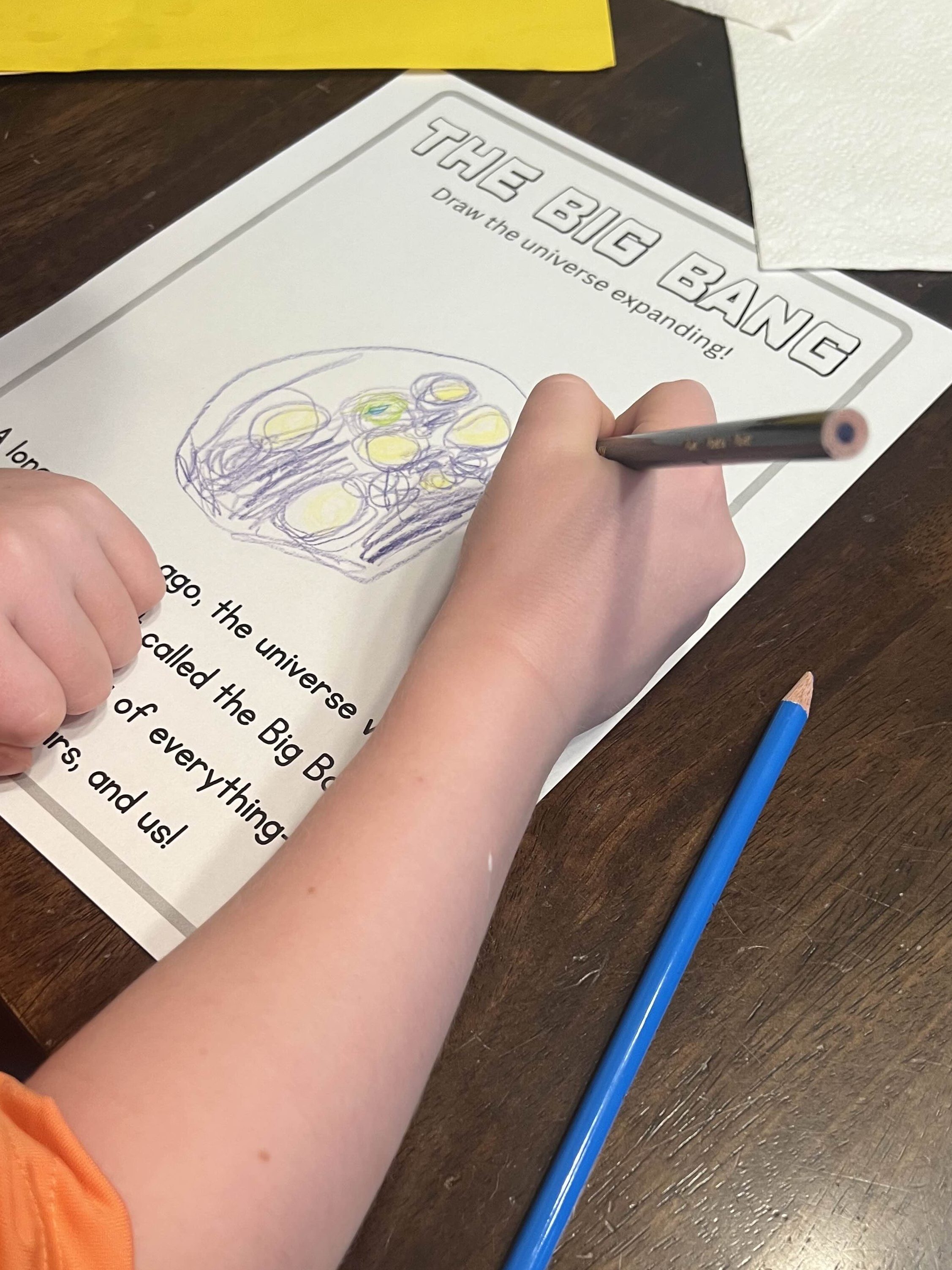
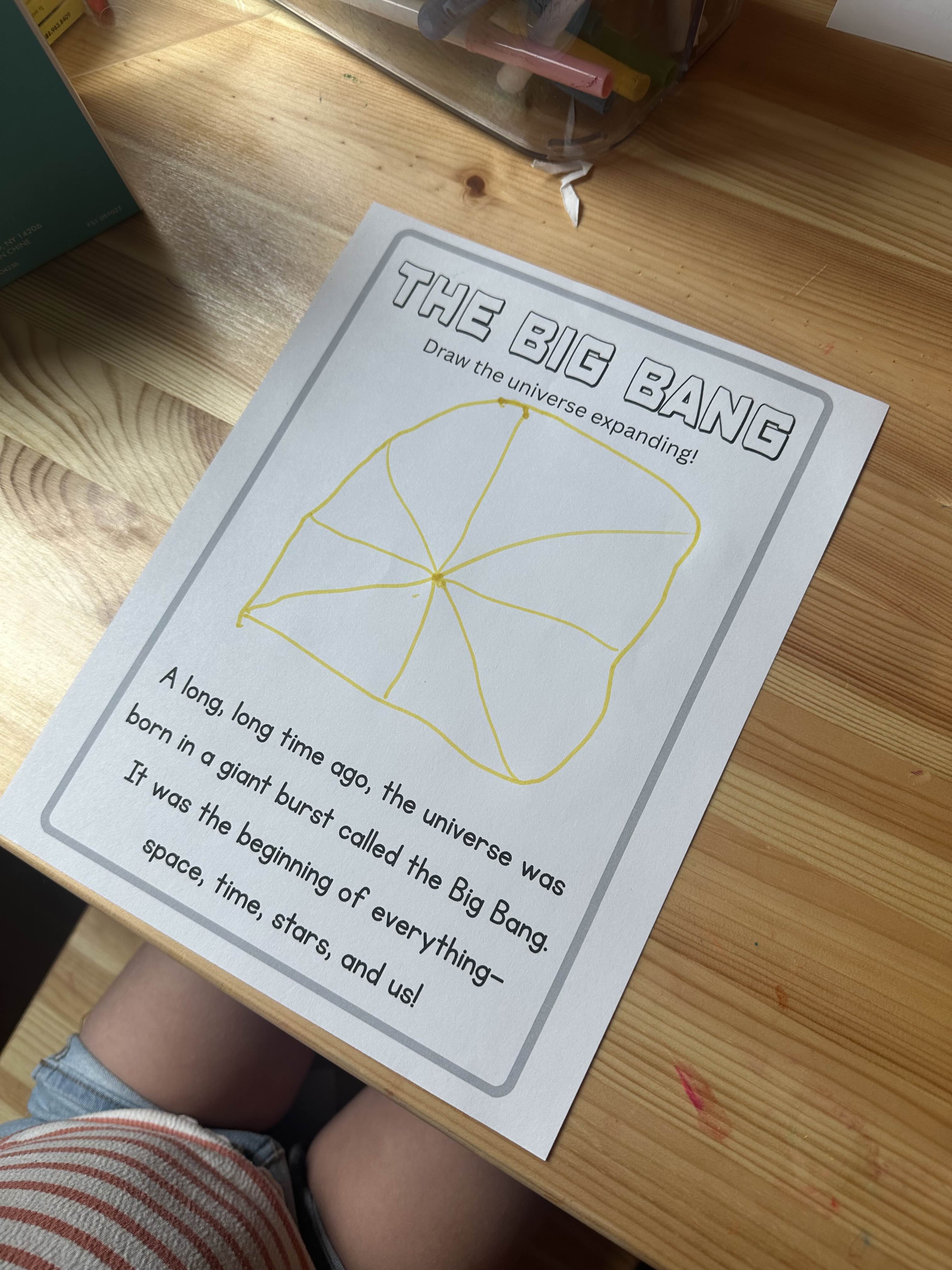
In our Big Bang lesson, children explore the science behind the universe’s beginnings through both hands-on experiments and storytelling connections.
- Level 1 lessons introduce younger learners to the Big Bang as an imaginative “stretching of space.”
- Level 2 lessons dig deeper into the science, including redshift, cosmic microwave and background radiation.
Both levels include a balloon expansion model, engaging discussion questions, and activities that make the science come alive.
Beyond Science: Story, Arts, and Curiosity
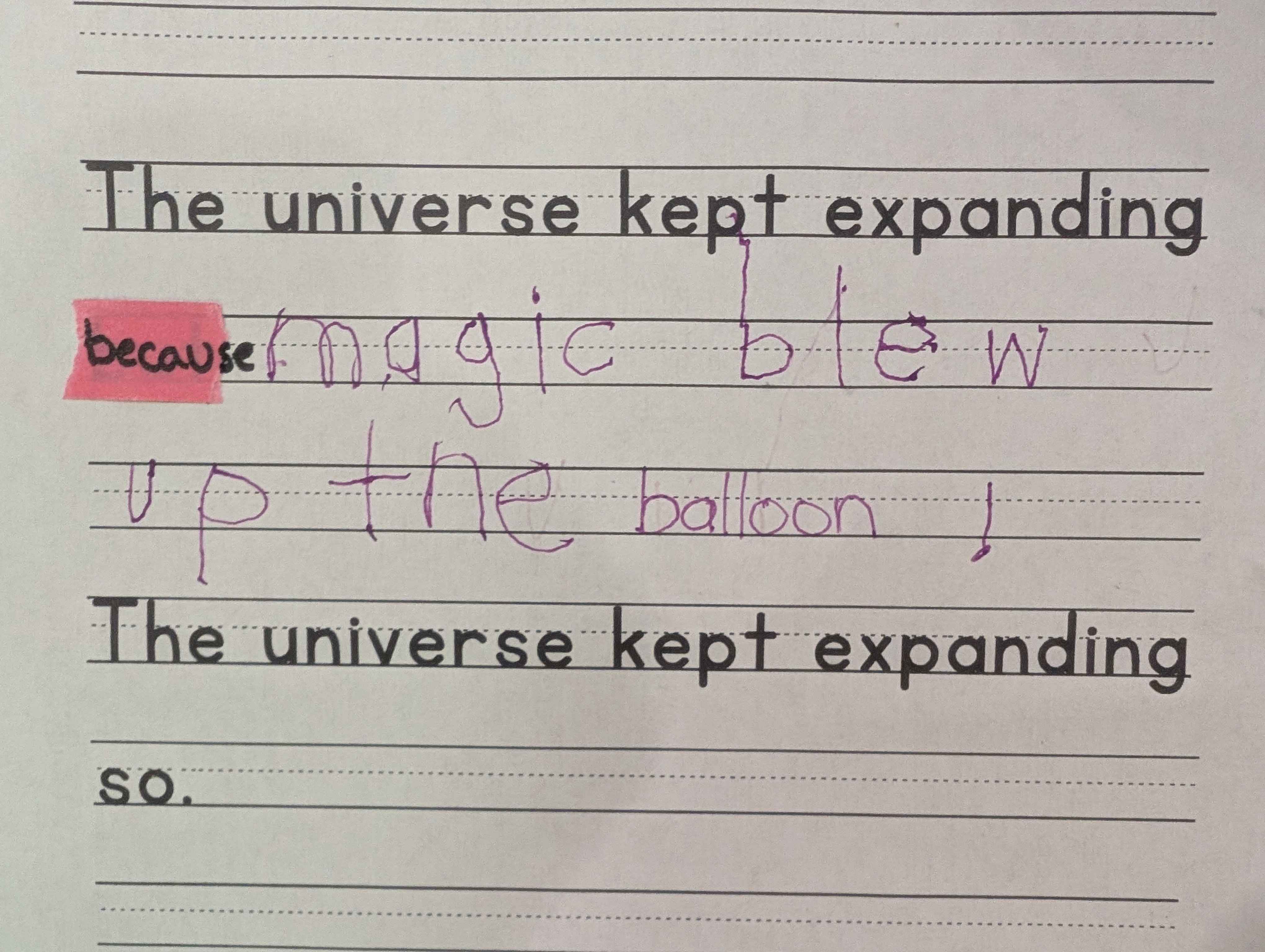
Because Stardust to Storytellers is more than just science, the Big Bang lesson also offers:
- Literature connections: Explore creation myths alongside modern cosmology.
- ELA practice: Grammar and writing activities tied to science content.
- Fine arts integration: Percussion and music activities that model the energy of the expanding universe.
- Rabbit Holes: Optional extension books, videos, and big questions for curious learners who want to dive deeper.
Playful Learning at the Center

One of the core values of Stardust to Storytellers is playful learning — because children learn best when they are curious, joyful, and engaged.
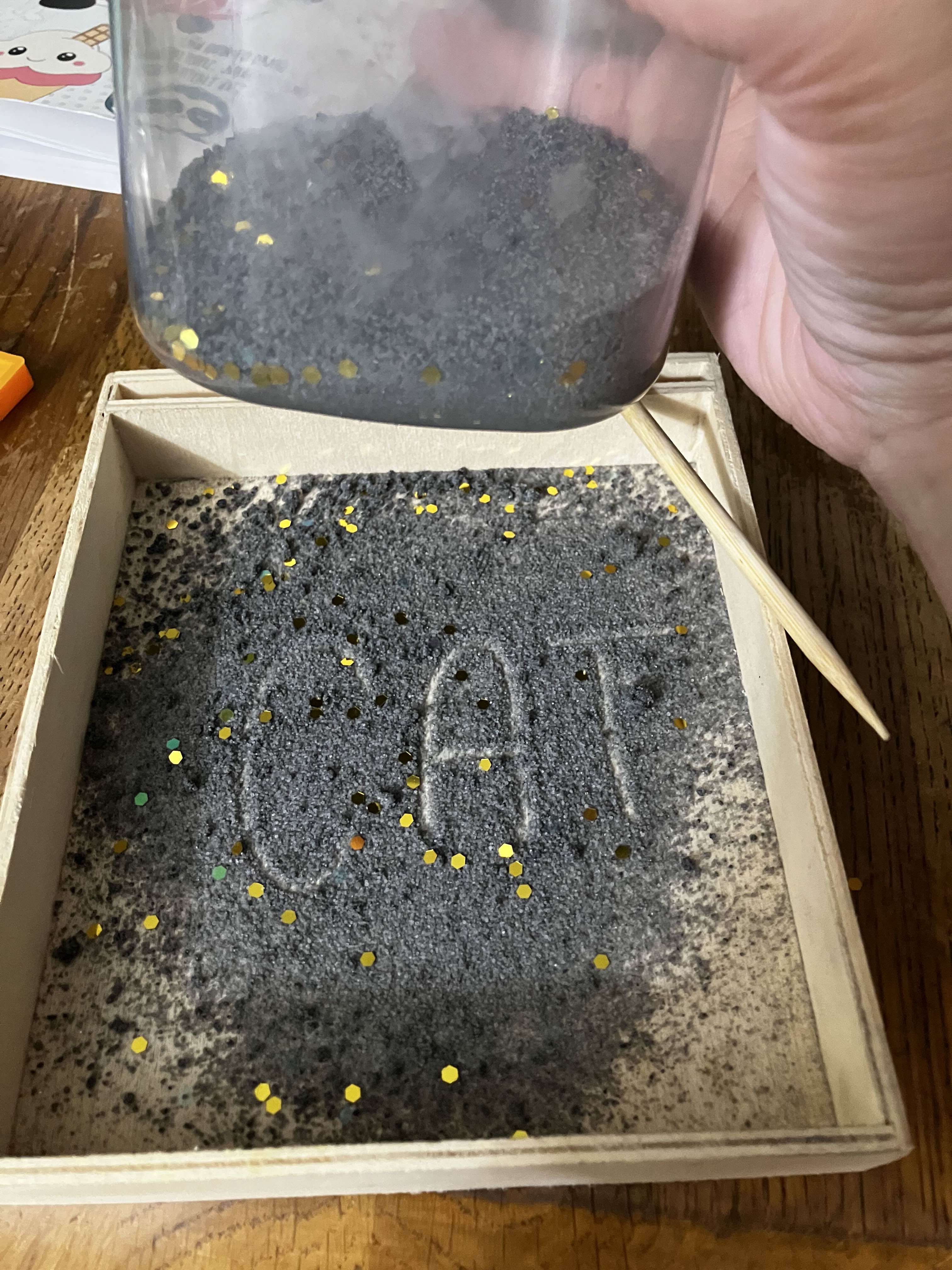
- Younger students might scoop and pour in a black bean sensory bin while discussing the “nothingness” before the Big Bang.
- A ball of play dough becomes a singularity that can be stretched into the expanding universe.
- Percussion instruments let learners feel the Big Bang through sound and rhythm.
These playful, multisensory activities help abstract science ideas click while keeping the wonder and excitement of learning alive.
Why Begin with the Big Bang?
Starting with the Big Bang places children in the grand story of the universe. It reminds them that the atoms in their bodies were forged in stars, that we are all made of stardust, and that science is one of the ways we tell our human story.
The Big Bang isn’t just a science lesson — it’s the opening chapter in the journey from stardust to storytellers.
✨ Want to explore the Big Bang and beyond with your learners? The Big Bang lesson is part of our Stardust to Storytellers: Prehistory curriculum — a 36-week program that takes students from the birth of the universe to the first Paleolithic humans through science, literature, and the arts.

 Rabbit Hole Learning
Leave a comment