
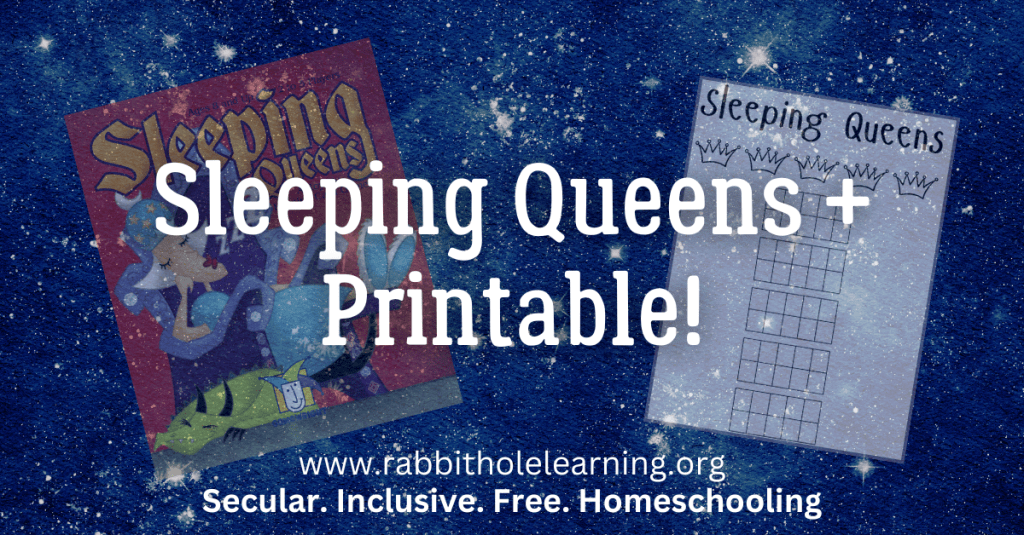
If you haven’t played Sleeping Queens yet, I’m really excited to share with you one of our favorite games! This game was designed by a six-year-old and is full of imagination, math, memory, and strategy, all wrapped up in a colorful fairytale theme.
Why We Love It
At first glance, Sleeping Queens looks like a silly game about waking up queens and collecting points. But underneath the whimsy are so many opportunities for learning:
- Math practice: Players constantly add up their points and using simple arithmetic when playing number cards.
- Memory skills: Keeping track of which queens are still asleep, who holds special cards, and where the sleeping potions might appear all boost working memory.
- Strategy and critical thinking: Kids learn to plan ahead, weigh risks, and think through possible outcomes before making their move.
- Social-emotional learning: Taking turns, handling surprises (like a dragon stealing your queen!), and celebrating each other’s wins all help build emotional regulation and sportsmanship.
Other Ideas
- Math tie-ins: Use it to introduce and reinforce simple equation making or counting to 50. Use the printable below to reinforce ten frames!
- Creative Writing tie-ins: After playing, ask your child to write a short story about one of the queens, or create their own “new queen” card with a name, illustration, and special ability.
- Creative extensions:
- Think of new power cards that could be played and test it out.
- Let kids design their own set of cards based on a topic they’re studying (for example, Sleeping Dinosaurs or Sleeping Scientists).
Learning Through Play
Games like Sleeping Queens remind us that learning doesn’t have to look like worksheets or textbooks. Play builds so many essential skills, from flexible thinking to focus, while keeping our days joyful and connected.
Free Printable!
This printable set helps kids visualize their points going through the game. It’s designed to be laminated or put in a dry erase sleeve.
The top set of crowns are to track how many queens they currently have (when they get to five they win!) and the bottom set is for tracking the points their queens give them. When they fill it up, they’ve won! This really helps younger learners visualize their points and connect it with math concepts they’re learning.
Alternatively, you could also break out the place value blocks to help them connect the values to that!
 Rabbit Hole Learning
Leave a comment